Food Help Guide
Food Bank vs Food Pantry: What’s the Difference and Where Should You Go First?
When you need food help quickly, it is easy to feel overwhelmed by the terms people use online.
Some websites say food bank, others say food pantry, and many families
are left wondering if they mean the same thing. They are related, but they are not exactly the same.
This guide explains the difference, where to go first, what to bring, and how to find help faster
for yourself or your family.
Quick Answer
A food bank usually collects and stores food for partner organizations, while a
food pantry usually gives food directly to individuals and families.
If you need groceries now, a food pantry is often the best place to try first.
In This Guide
What Is a Food Bank?
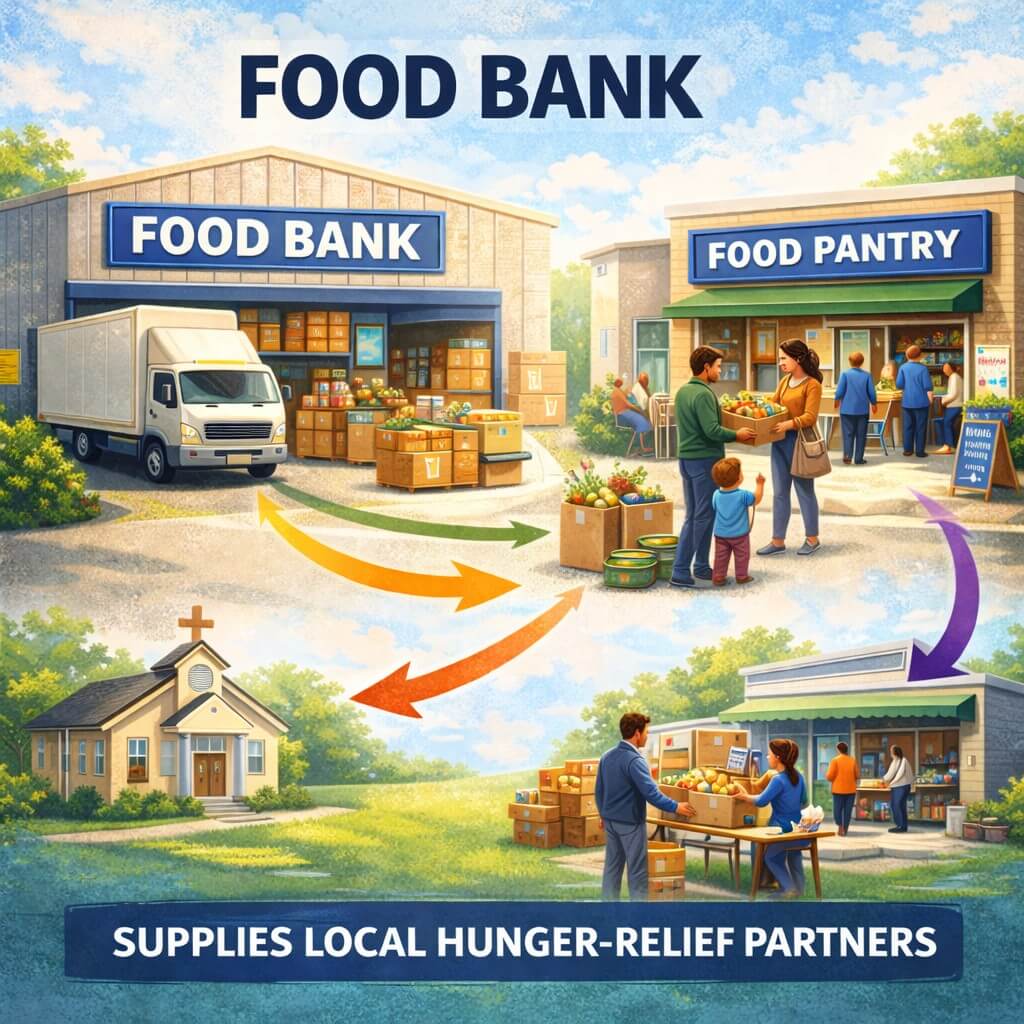
A food bank is usually a larger organization that collects, stores, and distributes food
to smaller community programs. In many cases, a food bank does not serve individuals directly at its main location.
Instead, it supports food pantries, churches, shelters, charities, and other local partners.
You can think of a food bank as the larger supply center behind the scenes. Its role is to gather food from
donations, retailers, food drives, and community partners, then move that food to places where families can receive help.
What a Food Bank Usually Does
- Collects and stores donated food
- Supplies local hunger-relief partners
- Supports community food programs
- May help people find nearby partner locations
What Is a Food Pantry?
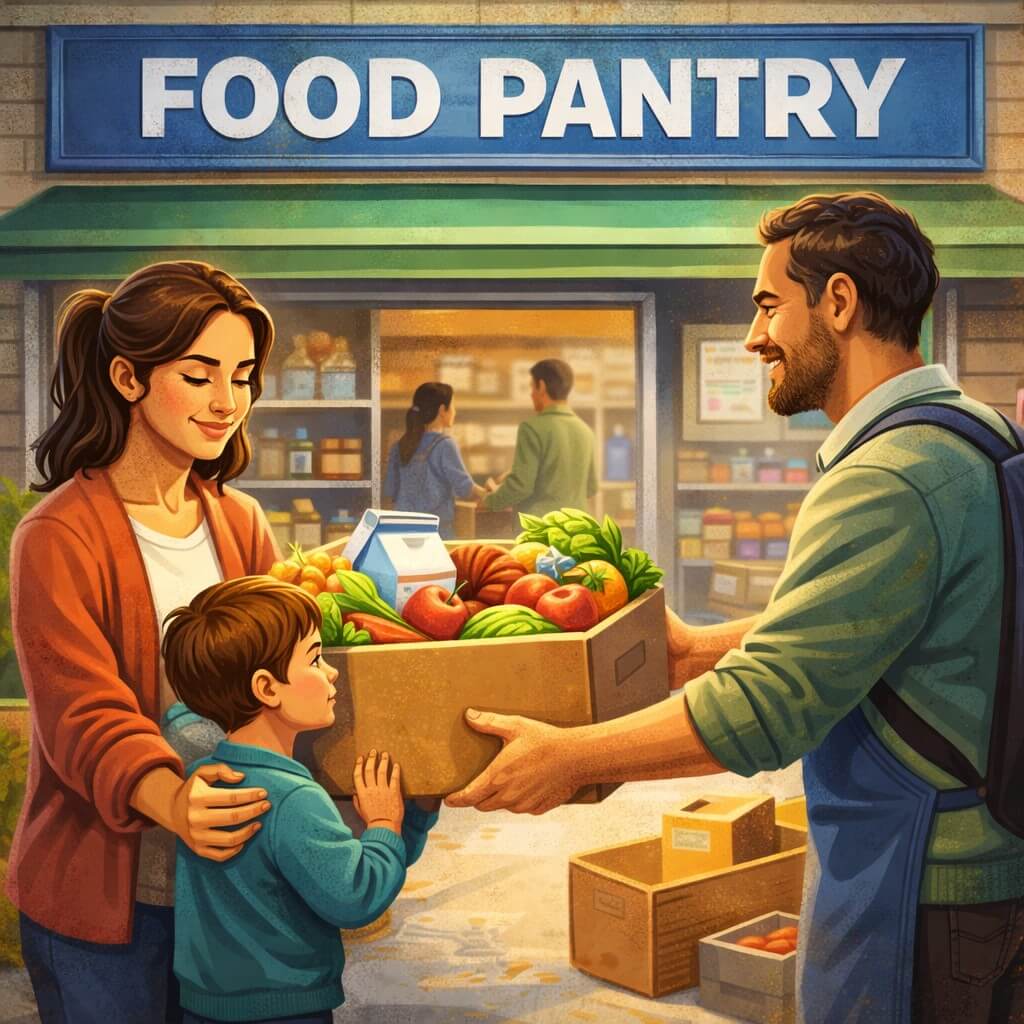
A food pantry is usually the place where individuals and families go to receive food directly.
Food pantries are often run by churches, nonprofits, schools, charities, and community groups.
This is typically the kind of place where someone can receive groceries, pantry staples, canned goods,
produce, bread, or emergency food boxes. Some food pantries allow walk-ins, while others use scheduled
distribution days or appointments.
What a Food Pantry Usually Does
- Provides food directly to families and individuals
- Offers groceries or emergency food boxes
- May have weekly, monthly, or event-based distribution
- May ask for basic household information
Food Bank vs Food Pantry: The Main Difference
The difference is simple: a food bank usually stores and distributes food to partner organizations,
while a food pantry usually gives food directly to people and families.
Food Bank
Usually stores and distributes food to partner organizations.
Food Pantry
Usually gives food directly to people and families.
Where Should You Go First?
If you need help quickly, start with a food pantry or local food distribution site.
That is usually the fastest path to direct support.
A food bank is still worth checking because it may help you find nearby pantries, mobile food distributions,
and other food assistance programs in your area.
Best Order to Follow
-
1
Search for a food pantry near you -
2
Check if there is a food distribution today -
3
Review the nearest food bank network or directory -
4
Contact a local helpline if you still cannot find help
What Should You Bring?
Requirements vary by location, but some pantries and local programs may ask for basic information
to confirm who they serve.
Common Items
- Photo ID
- Proof of address
- ZIP code
- Household size
- Names or ages of children in the home
Important
If you do not have everything, it is still worth calling or visiting.
Some places are flexible, especially when food help is urgent.
Quick Comparison Chart
Visual Summary
What If the First Place You Try Cannot Help?
If one pantry is closed, full, or unavailable, try another option right away.
Food help may also be available through churches, charities, shelters, school programs, and community centers.
Try These Backup Options
- Another nearby food pantry
- A local food distribution event
- A community charity
- A shelter or family support organization
- A local helpline
Helpful Reminder
If one location cannot help, that does not mean help is unavailable.
Availability can change from one organization to another.
Official Resources
These official resources can help readers go further and find additional support.
Frequently Asked Questions
Is a food pantry the same as a food bank?
No. A food bank usually stores and distributes food to partner organizations, while a food pantry usually gives food directly to families and individuals.
Which one should I contact first if I need food today?
In most cases, start with a local food pantry or food distribution site. That is usually the fastest route to direct help.
Do food pantries require ID?
Some do and some do not. Requirements vary by location, so it is best to call ahead when possible.
Can a food bank still help me if it does not give out food directly?
Yes. A food bank may help you find nearby partner pantries, food distributions, and other local programs.
Final Thoughts
If you are choosing between a food bank and a food pantry, remember this:
a food pantry is usually the place to go for direct food help, while a food bank is often the larger network behind it.
The best first step is the one that gets you help faster. Search local options, check hours,
and keep going if the first result does not work out.